
Chocolate Tempering Explained: Temperature Curves and Why They Matter
Tempering is a controlled melt, cool and working-temperature process. The settings must match your chocolate and the process that follows.
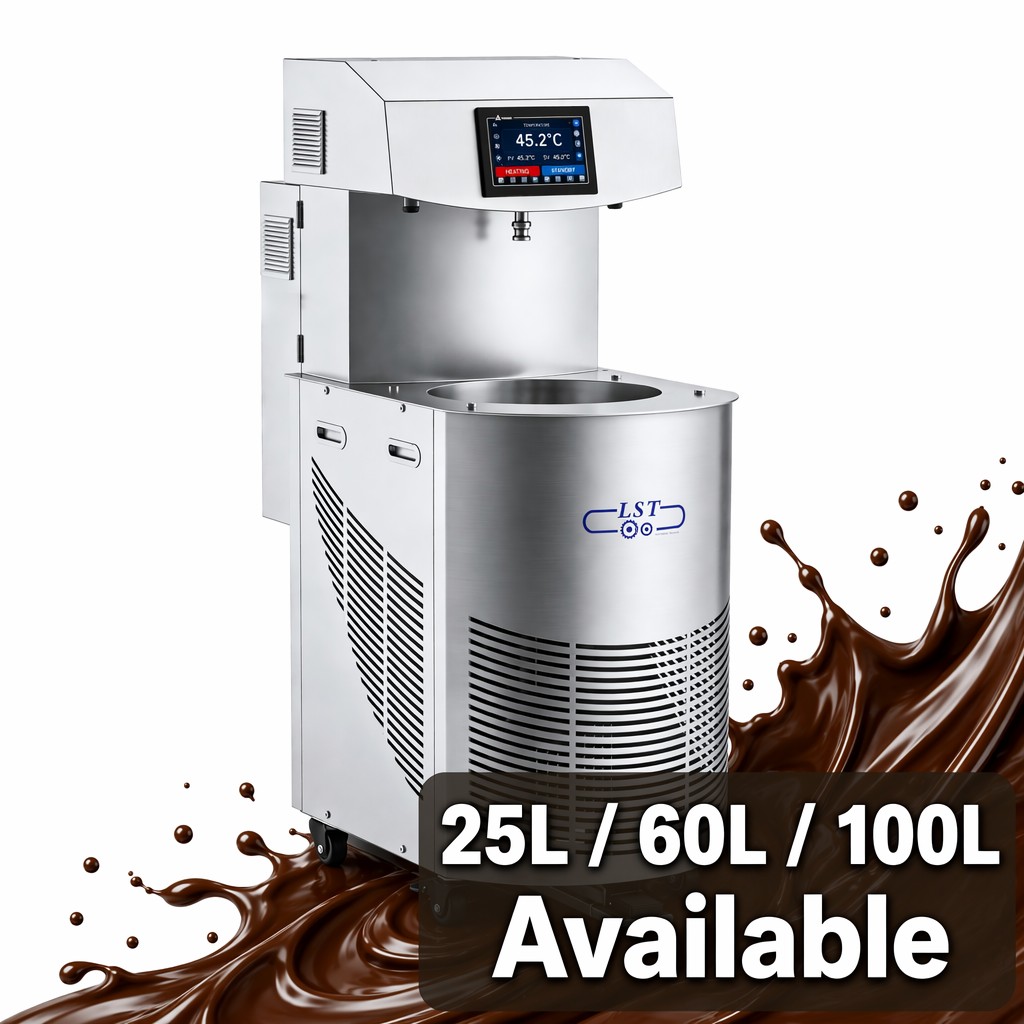
What does tempering do?
Melting chocolate alone is not the same as tempering it. A controlled temperature cycle helps cocoa butter form a stable crystal structure. For suitable chocolate, the aim is a glossy finish, clean release and consistent texture. Recipe, room conditions and cooling also affect the final result.
How should you read a tempering curve?
The LST batch-tempering reference gives an illustrative sequence of approximately 50°C melting, 28°C cooling and 31°C working temperature. These are not universal settings for every dark, milk, white or compound recipe. Confirm the chocolate type and validate the working curve with the actual material and downstream process.
Choosing a machine and line
Start with actual batch size, desired production rhythm and the next process step. Compare the batch tempering machine range and the 5.5L model for small-batch work. If coating is the next step, review the enrobing machine and cooling arrangement as part of the whole line. Accessories and line integration depend on the quoted configuration, not on the tempering machine alone.
What to confirm before requesting a quote
- Chocolate type and intended finished product
- Batch quantity or target output and changeover frequency
- Moulding, depositing or enrobing requirements
- Available power, space and cooling method
Share your chocolate type, batch size and next process step. We can discuss a suitable configuration without assuming one curve or model fits every recipe.
Discuss your tempering project
Use the message field for your product, batch size and process requirements.