
Chocolate Ball Mill vs Melanger: Which Grinder Do You Need?
Compare steel-ball and natural-stone grinding by your feed material, required output and target fineness. Final equipment selection depends on the actual process.
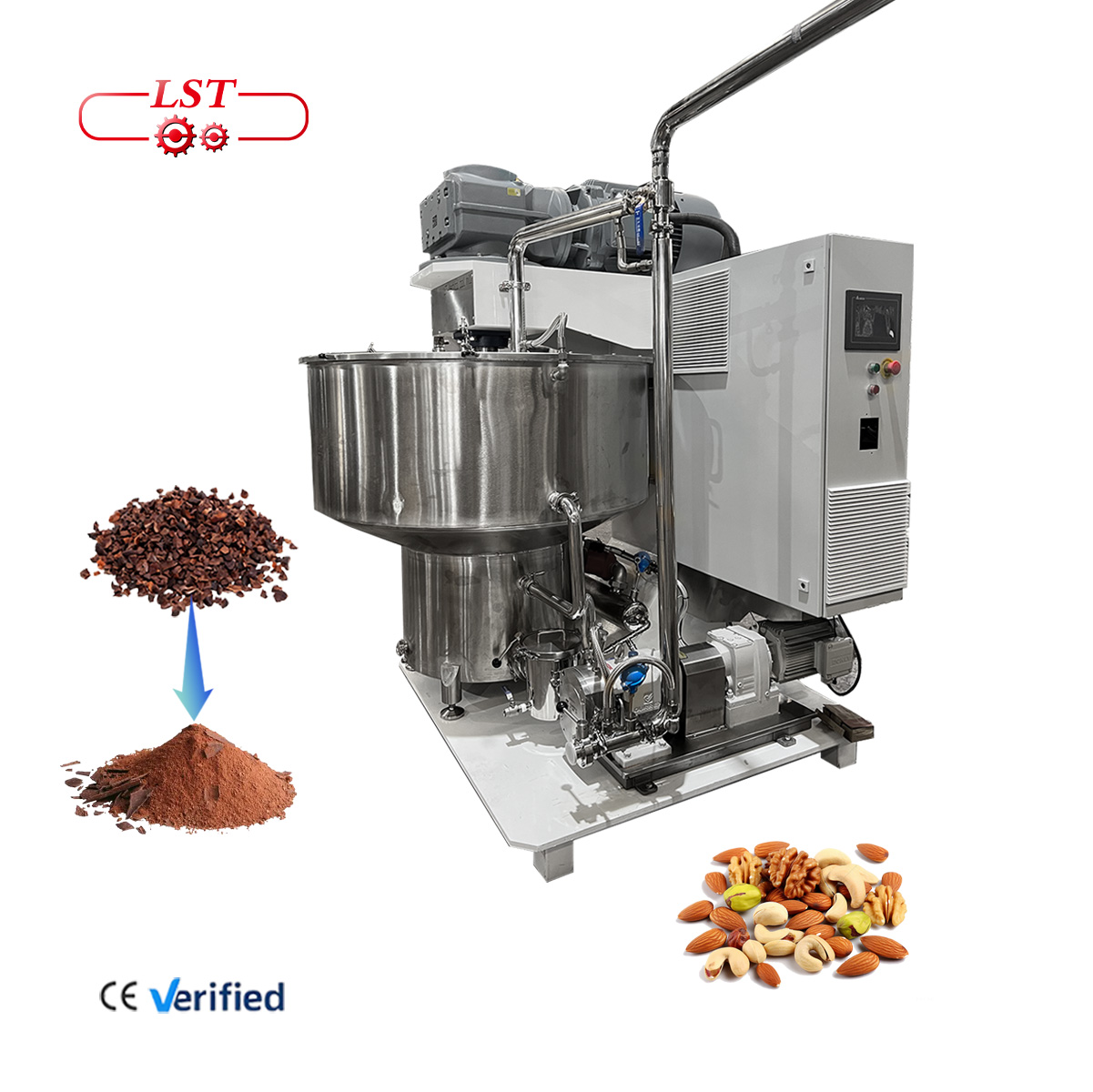
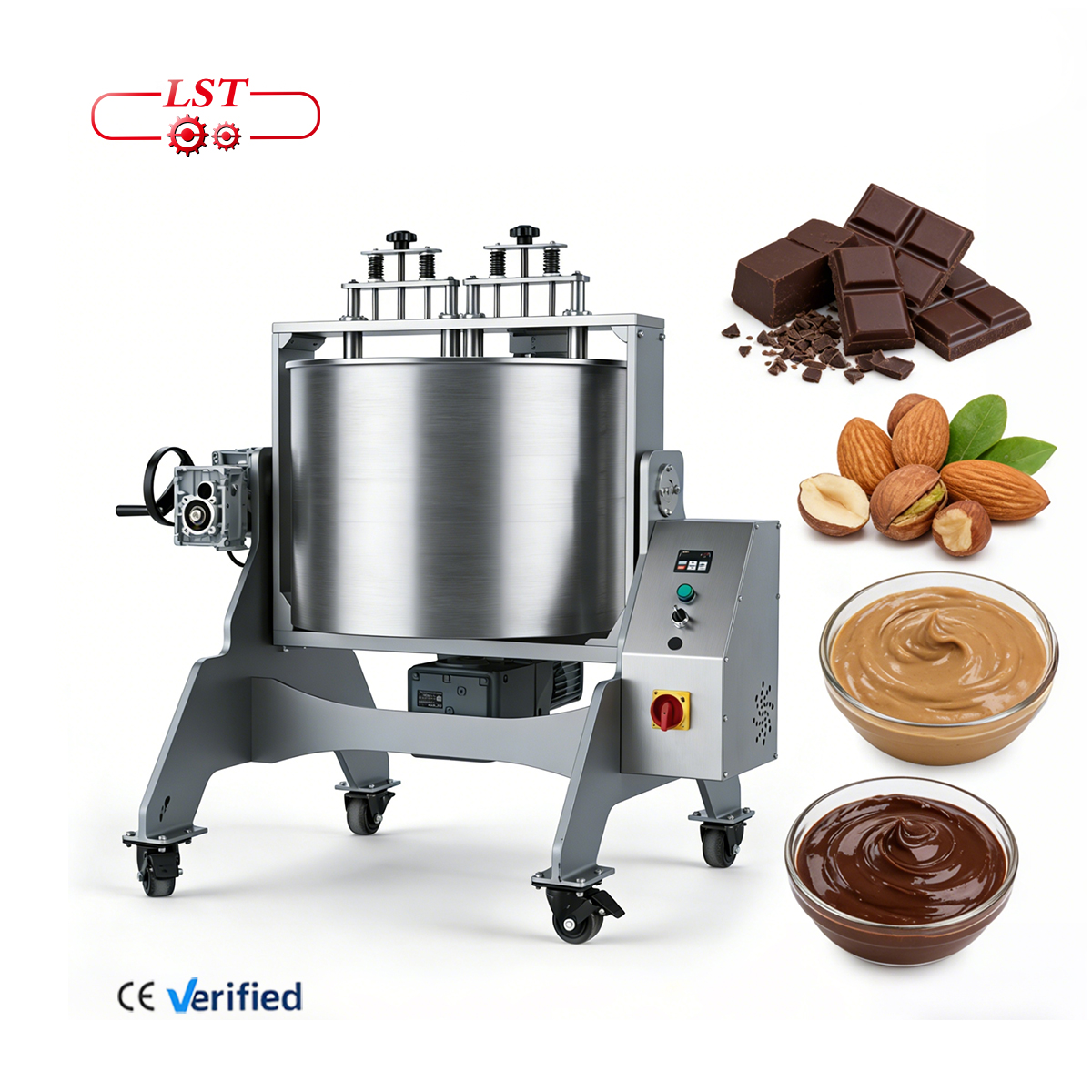
Two Machines, Same Goal
A chocolate ball mill and a stone mill (melanger) can both refine cocoa-containing material, but use different grinding mechanisms. They differ in how they grind, how long they take, and what volume they suit. Choosing between them comes down to throughput, target fineness, and how traditional you want the process to be.
How a Ball Mill Works
A ball mill grinds by impact and friction: steel balls move at high frequency inside a chamber, and the contact area between media and particles is very large. The practical result:
- Ball-mill reference: 4-6 hours for listed batch conditions; actual time depends on material and setup. This is not a measured comparison with the stone mill
- Fineness: 18-25 microns, consistent batch to batch
- Capacity range: from a 30L laboratory unit up to continuous lines of 300-3000 kg/h
Grinding media is selectable: CGR15 high-carbon chromium steel balls for productivity and wear life, or SUS304 stainless balls where compliance or lower maintenance matters more.
How a Melanger Works
A melanger grinds using traditional stone elements at low speed. Craft and bean-to-bar producers often prefer it because the slower, cooler grind suits the flavour development they are after. Melangers are typically chosen for small-batch and craft production, flavour-led traditional profiles, and workshop-scale volumes.
Side-by-Side
| Ball Mill | Melanger | |
|---|---|---|
| Grinding action | Steel ball impact / friction | Stone grinding |
| Typical time | 4-6 hours | Confirm the cycle with the chosen material and model |
| Fineness | 18-25 microns | Varies by setup |
| Throughput | Batch 30-1000 L; continuous 300-3000 kg/h in the LST reference range | Small-batch |
| Best for | Production volume, consistent fineness | Craft, flavour-led small batches |
Which Should You Choose?
Choose a ball mill if you need production throughput or plan to scale, consistent micron fineness matters for your product spec, or you want to reduce refining time significantly.
Choose a melanger if you are producing small batches, traditional flavour development is the priority, or volume is secondary to character.
Scaling note: if you are feeding cocoa nib rather than liquor into a fine ball mill, you will need a pre-grinding stage – the fine mill feed pump requires limited particle size. A coarse mill of similar volume can prepare the material in about an hour per batch.
A Practical Path
Many producers start with a melanger for development and small runs, then add a ball mill when volume justifies it. Others go straight to a ball mill because they already know their target output. Either way, matching the grinder to your real batch size – not your projected one – avoids both bottlenecks and wasted capacity.
Planning Your Chocolate Line?
Compare the complete chocolate refining solution, or tell us your product type and daily capacity for a suitable configuration.
Share your material, batch size or kg/h target, required fineness and existing equipment. We can discuss a suitable configuration without assuming one machine fits every recipe.
Discuss your grinding project
Describe your product and production target in the message field. Please avoid confidential recipe details unless you choose to share them.